At-Home Baby Play: Sensory & Motor Ideas (0–12 Months)
Playtime Ideas for Babies at Home: Sensory Play and Motor Skills Activities
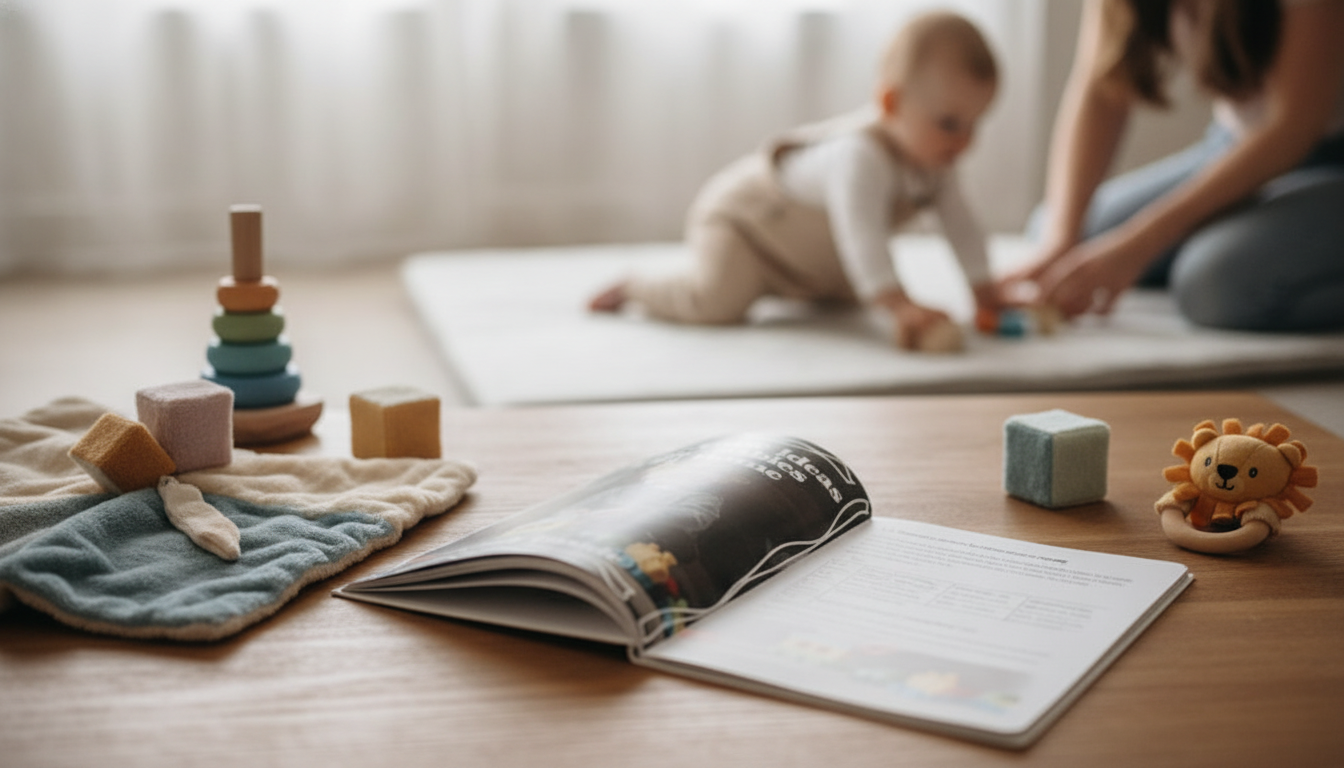
Play can be simple, safe, and developmentally meaningful—especially at home with everyday items. With a few calm, repeatable setups, babies get rich practice with sensory exploration, coordination, and early motor milestones. Below are age-based ideas you can rotate throughout the week, plus a digital eBook option for caregivers who want a ready-to-use activity library that’s easy to reference during busy days.
What makes baby play “development-friendly” at home
At-home play works best when it’s responsive, low-pressure, and built for repetition. Instead of trying to “teach” a skill quickly, create chances for your baby to explore and try again and again.
- Follow the baby’s cues: short, calm sessions beat longer overstimulating ones.
- Balance sensory input (touch, sound, movement, sight) with recovery time.
- Use simple setups that encourage repetition—babies learn through doing the same thing often.
- Prioritize floor time for free movement; rotate toys rather than adding more.
- Keep interactions responsive: narrate, mirror sounds, and pause to let baby respond.
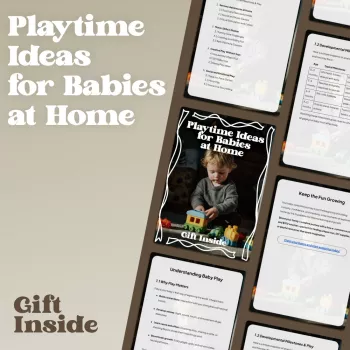
If you’d like a structured library you can dip into anytime, see Playtime Ideas for Babies at Home | Digital Baby Activity eBook for Sensory Play, Motor Skills & Development.
Safety basics for sensory play and movement
- Supervise closely; avoid small parts and loose items that can fit through a toilet-paper roll.
- Choose non-toxic, taste-safe materials; assume everything may go in the mouth.
- Use stable surfaces and stay on the floor for most activities to reduce fall risk.
- Watch for signs of overload (turning away, arching, crying) and reduce stimulation.
- Skip water beads, uninflated balloons, and strong magnets due to serious ingestion/choking risks.
For milestone context and age expectations, trusted references include the CDC milestone lists and guidance from HealthyChildren.org (American Academy of Pediatrics).
0–3 months: calm sensory play and early head control
In the earliest weeks, think “tiny doses.” A few minutes of gentle play—then a break—often goes farther than a long session.
- High-contrast tracking: Move a black-and-white card slowly side-to-side and pause so baby can re-focus.
- Tummy time micro-sessions: Try 1–3 minutes, several times daily; a rolled towel under the chest can help some babies tolerate it.
- Gentle touch play: Lightly tap or stroke hands/feet with different textures (cotton, soft towel) at a slow pace.
- Sound-and-pause: Shake a soft rattle briefly, then stop to encourage listening and attention.
- Mirror time on the floor: Use a baby-safe mirror during tummy time for visual engagement.
3–6 months: reaching, grasping, rolling, and cause-and-effect
As reaching becomes more intentional, set up play that invites your baby to grab, transfer, and shift their weight.
- Toy “handoff” practice: Offer an easy-grip ring at midline and encourage transferring hand-to-hand.
- Kicking station: Hang a light crinkle toy near feet while baby lies on their back (securely, no loose strings).
- Rolling motivation: Place a favorite item just to the side to encourage shifting weight and reaching across the body.
- Texture ribbons: Tie fabric strips to a larger ring (avoid loose pieces) for safe tactile exploration.
- Supported sitting play: Brief sessions with a firm cushion behind baby while you offer a toy at midline.
6–9 months: sitting, crawling preparation, and sensory discovery
Babies at this stage often love “take out, put in, repeat.” That repetition builds coordination, focus, and early problem-solving.
9–12 months: pulling up, cruising, and early problem-solving
Quick everyday setups (low-prep, high-repeat)
| Skill focus | Simple setup | What baby practices | Best age range |
|---|---|---|---|
| Tactile sensory | Texture basket (soft towel, silicone spatula, crinkle cloth) | Exploring different feels; tolerance for new textures | 3–9 months |
| Hand strength & grasp | Easy-grip rings + fabric strips tied to a larger ring | Grasping, pulling, hand-to-hand transfer | 3–9 months |
| Core strength | Short tummy time + mirror | Head control, pushing up, weight shifting | 0–6 months |
| Problem-solving | Toy partly under a cloth | Searching, persistence, cause-and-effect | 6–12 months |
| Balance & cruising | Couch cruising trail with soft toys | Side-stepping, standing endurance | 9–12 months |
When a digital activity eBook helps most
If you like jotting down what your baby loved (and what flopped), a simple notes system can help you rotate activities faster. Some caregivers use a dedicated notebook like Am I Perfect No Spiral Notebook – Funny Notebook – Best Design Notebook to track favorite setups by age.
Playtime Ideas for Babies at Home: Digital Baby Activity eBook
Explore the full guide here: Playtime Ideas for Babies at Home | Digital Baby Activity eBook for Sensory Play, Motor Skills & Development.
FAQ
How long should playtime be for a baby at home?
Short, frequent sessions are usually best—especially for newborns. Start with a few minutes at a time (like brief tummy time or tracking), then gradually extend as your baby stays comfortable and engaged.
What are safe sensory play ideas for babies who mouth everything?
Use taste-safe materials (like clean texture cloths) or sealed options (like a taped-down sensory bag), and stick to items too large to swallow. Avoid high-risk materials like water beads, uninflated balloons, and small loose parts.
How can play support motor skills without buying lots of toys?
Household setups can do a lot: tummy time variations, reaching for a scarf tied securely to a ring, pushing a weighted laundry basket in a clear space, or cruising along a couch with soft toys placed as “stops.” Rotate a few items instead of adding more.