AI Wardrobe System: More Outfits From What You Own
A Smart Wardrobe System That Makes More Outfits From the Clothes You Already Own
A closet can feel “empty” even when it’s full—usually because the pieces aren’t organized into repeatable outfit formulas. A simple digital wardrobe workflow paired with AI can quickly surface combinations that fit the day’s weather, dress code, and personal style—without buying more. That’s not just convenient; it’s also a practical way to reduce clothing waste and get more wear out of what you already paid for (see the EPA’s textiles data and the Ellen MacArthur Foundation’s work on circular fashion).
Why outfits feel hard when the closet is full
If getting dressed feels like a daily puzzle, it’s rarely because you “don’t have anything to wear.” It’s more often because the system around your clothes is missing a few key supports.
- Decision fatigue: too many options, no clear starting point, and a time limit (mornings don’t negotiate).
- Hidden inventory: a handful of favorites get repeated while great pieces disappear into the background.
- Missing connectors: a few versatile basics (layers, shoes, bags) unlock dozens of new combinations.
- Context gaps: outfits change based on weather, activities, comfort needs, and dress expectations—without those “filters,” every choice feels equally risky.
Build a digital inventory in under an hour
The goal isn’t to create a perfect catalog—it’s to create a usable list that makes outfit-building faster. Start by grouping items into real categories: tops, bottoms, layers, dresses, shoes, bags, and accessories. Then add a few details that actually affect styling decisions: color, fabric, fit, formality, season, and comfort level.
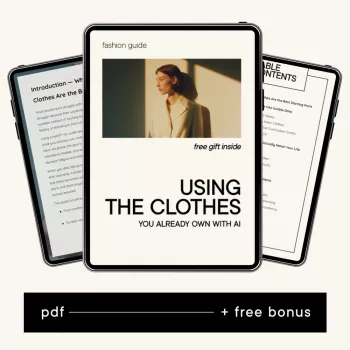
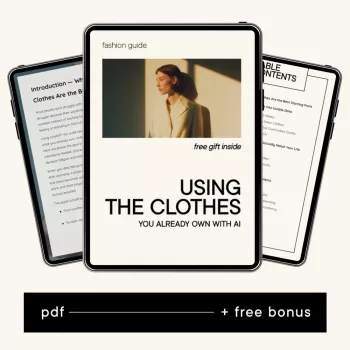
Keep tags grounded in daily life: “work,” “weekend,” “gym,” “date,” “rainy day,” “travel.” A spreadsheet or notes app works fine; photos are helpful but optional. If you like a guided structure, a ready-made template can speed this up: Using the Clothes You Already Own with AI | Smart Wardrobe Guide (Digital Download).
Fast wardrobe inventory template
| Category | Item | Color | Fit | Season | Formality | Tags |
|---|---|---|---|---|---|---|
| Top | Oxford shirt | Light blue | Relaxed | All-season | Smart casual | work, travel |
| Bottom | Straight jeans | Indigo | Mid-rise | All-season | Casual | weekend, errands |
| Layer | Blazer | Black | Tailored | Fall/Winter | Business | work, events |
| Shoes | White sneakers | White | Standard | All-season | Casual | weekend, travel |
Create outfit rules that match your life (not a trend cycle)
Outfit “rules” aren’t about restricting style—they’re about removing friction. Start with 3–5 default uniforms for the situations that repeat most often: office days, casual days, evenings out, active days, and travel days. Each uniform becomes a simple formula you can remix.
- Pick default uniforms: for example, “knit top + straight pant + third piece” for work, or “tee + jeans + elevated shoe” for weekends.
- Set a personal color structure: choose 2–3 core neutrals (like black, navy, cream) and 2–4 accents that mix easily.
- Define comfort boundaries: shoe height limits, breathable fabrics, layering needs, and what you refuse to fuss with.
- Decide what “finished” means: a third piece, a defined waist, cohesive shoes, or one statement accessory.
If you’re a creator or you often appear on camera, treat “video-call friendly” as its own uniform: strong neckline, solid color, and one simple accessory. A compact planning notebook can help you track formulas that work: Am I Perfect No Spiral Notebook.
Use ChatGPT to generate outfit ideas from your own closet
Once you have even a basic inventory, AI can function like a personal outfit assistant—especially when you provide context. You can use ChatGPT with a simple text list of items and a few real-life constraints.
- Share your inventory + context: weather, activity, and formality (plus comfort needs).
- Ask for multiple formulas: “top + bottom + layer” options alongside “dress + jacket” or “monochrome set + statement shoe.”
- Request variations: rotate shoes, bags, and accessories so repeat outfits feel new.
- Add constraints: “only comfortable shoes,” “no dry clean,” “warm but not bulky,” “works on video calls.”
A weekly workflow that keeps the system effortless
If you travel frequently or you’re training for a solo sport, build a “packable uniform” that repeats well: comfortable base layers, one connector jacket, and shoes that can handle long days. For an adjacent mindset shift on independence and routine, see Flying Solo: The Ultimate Guide to Mastering Solo Sports.
Common wardrobe gaps that unlock the most combinations
For content creators who also think in systems, the same “connector” idea applies to planning: a repeatable checklist saves time. If that’s relevant, The Ultimate TikTok Trend Analytics Checklist (Digital Download) can help structure your workflow the way a wardrobe system structures outfits.
A ready-to-use digital style system download
If you want the whole workflow pre-built—inventory structure, tags, and outfit formulas—use a download designed specifically to pair with AI outfit suggestions. Smart Wardrobe Guide: Using the Clothes You Already Own with AI (Digital Download) is built to help you organize what you own, generate wearable combinations, and reduce unnecessary shopping by focusing on high-impact connectors.
FAQ
Do wardrobe apps work better than a simple spreadsheet or notes app?
The best tool is the one you’ll actually keep updated. Apps can make photos and tagging faster, while spreadsheets and notes are often quicker to start and easier to customize; begin simple and upgrade only if you feel friction.
How detailed does the closet list need to be for good outfit ideas?
A minimum workable list is category, color, season, and formality. Adding fit, fabric, comfort notes, and a few lifestyle tags improves results, but clear context for the day often matters more than perfect data.
Can AI help without uploading photos of clothing?
Yes—AI can generate strong outfit ideas from text alone if you describe key colors and silhouettes. Photos are optional, so you can keep the process privacy-friendly while still getting useful combinations.