Confident Walking: Posture, Gait & Body Language Tips
Walk Like You Mean It: A Practical Guide to Confident Walking, Posture, and Body Language
Confidence often shows up before a single word is spoken. The way someone walks can signal ease, presence, and self-assurance—or communicate tension and uncertainty. Confident walking is not about pretending to be someone else; it is a set of learnable mechanics and habits: posture that stacks the body efficiently, a gait that feels grounded and smooth, and body language that matches how someone wants to be perceived. With a few targeted adjustments, walking can feel more comfortable, look more composed, and support a stronger inner state in everyday situations like work, social events, presentations, and travel.
What Confident Walking Communicates
A confident walk tends to look simple because the body is doing fewer “extra” things: less bracing, less fidgeting, less wavering. Small signals add up quickly.
- A steady, unhurried pace suggests calm control, while rushed or hesitant steps can read as stress or uncertainty.
- An upright posture with relaxed shoulders tends to be perceived as open and capable, whereas collapsed posture can signal discomfort or low energy.
- Consistent rhythm and direction reduce micro-signals of doubt such as frequent stopping, drifting, or fidgeting with belongings.
- Confident walking is most convincing when it is comfortable; strain, stiffness, or exaggerated movement often looks performative rather than assured.
If you want a deeper dive into the meaning behind nonverbal cues, the APA definition of body language is a helpful starting point for understanding how movement communicates.
Body Alignment Basics: Build a Strong, Natural Posture
Posture is less about “standing up straight” and more about stacking: head over ribs, ribs over pelvis, pelvis over feet. When alignment improves, walking often looks more confident without adding effort.
- Start with a neutral head position: chin level, neck long, eyes forward (not down at the floor).
- Stack ribcage over pelvis to avoid over-arching the lower back or collapsing the chest; aim for “tall, not tense.”
- Let shoulders drop away from ears and widen across the back; tension often hides in the traps and jaw.
- Keep arms free to swing naturally; holding bags too tightly or pinning elbows back can create stiffness.
- Use breath as an anchor: slow nasal breathing can reduce stress posture (hunched shoulders, tight abdomen).
For a clear overview of why alignment matters to comfort and energy, see Harvard Health Publishing’s take on good posture.
Gait Mechanics That Look (and Feel) Confident
Once posture is set, gait becomes the “moving version” of that alignment. The goal is smoothness: steady cadence, stable torso, and steps that don’t fight your joints.
- Walk with a consistent cadence: choose a pace that feels purposeful without rushing; avoid sudden speed changes.
- Land softly and roll through the foot; heavy stomping often signals tension, while overly delicate steps can appear tentative.
- Think “hips forward, torso stable”: the pelvis guides direction, while the upper body stays calm and upright.
- Allow a natural arm swing that matches stride length; asymmetry (one arm still, one swinging) can read as nervousness or distraction.
- Keep steps moderate in length; overstriding can create a bouncing or unstable look and may strain joints.
If you want a quick technique check from a medical authority, Mayo Clinic’s proper walking technique guide breaks down core form cues in an approachable way.
A Quick Self-Check: Posture and Presence Checklist
| Check | Cue | Common fix |
|---|---|---|
| Head & gaze | Eyes forward, chin level | Lift gaze from phone; imagine a string gently lifting the crown |
| Shoulders | Down and wide, not back and rigid | Exhale and let shoulders drop; soften the collarbones |
| Chest & ribs | Open but relaxed | Avoid “military chest”; think tall through the sternum without flaring ribs |
| Core & pelvis | Neutral, steady | Untuck and un-arch; place ribs over hips |
| Arms & hands | Easy swing, relaxed fingers | Unclench jaw/hands; keep elbows softly bent |
| Stride & pace | Consistent rhythm | Shorten stride slightly; aim for smooth steps, not hurried ones |
Body Language While Walking: Hands, Face, and Personal Space
Confidence Under Pressure: Walking Into Meetings, Dates, and Crowded Spaces
A Simple 7-Day Practice Plan
Deepen the Skill: A Guided Approach to Walking With Presence
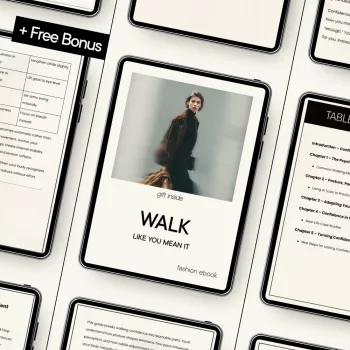
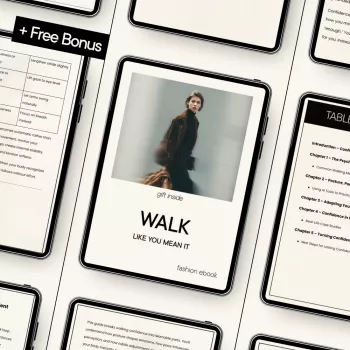
For structured drills, posture cues, and body language principles in one place, a step-by-step guide can make practice feel straightforward and repeatable. The Walk Like You Mean It – Confident Walking Guide, Body Language & Posture eBook is built for real situations (arrivals, crowds, social settings) so improvements transfer beyond “practice mode.”
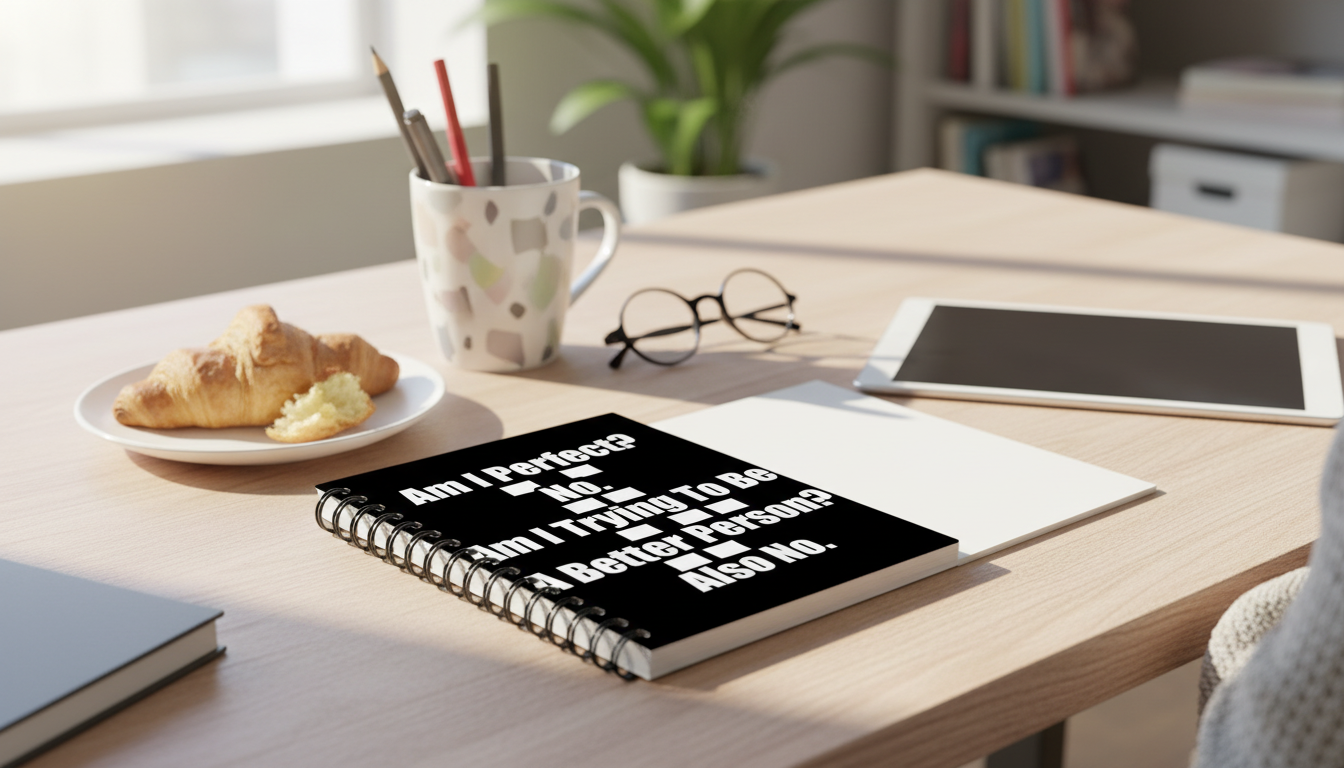
To keep your cues consistent, a simple tracking system helps. Use the Am I Perfect No Spiral Notebook – habit notes and practice tracking to jot down which two cues you’re using that week and what changed in comfort, pace, and presence.
If walking confidence is part of a broader independence goal—showing up solo, moving with ease in new environments, and staying steady under pressure—Flying Solo: The Ultimate Guide to Mastering Solo Sports complements the mindset side of building self-trust through action.
FAQ
How long does it take to walk more confidently?
Many people notice visible changes in a few days when they repeat one or two cues (like gaze forward and relaxed shoulders). Longer-lasting habit change usually takes a few weeks of consistent check-ins, especially if stress or fatigue tends to pull posture down.
How can confident walking look natural and not forced?
Prioritize relaxation and alignment over exaggeration: steady cadence, soft shoulders, and easy breathing look more natural than rigid “perfect posture.” Change one element at a time, then let the rest of your walk stay normal so the result feels like you.
What if posture changes cause discomfort?
Reduce the intensity and aim for gentle stacking rather than holding a hard position; discomfort often comes from overcorrecting. Check footwear and what you’re carrying, take short breaks, and consult a qualified professional if pain persists or worsens.