Home Dog Training Basics: 7-Day Beginner Plan
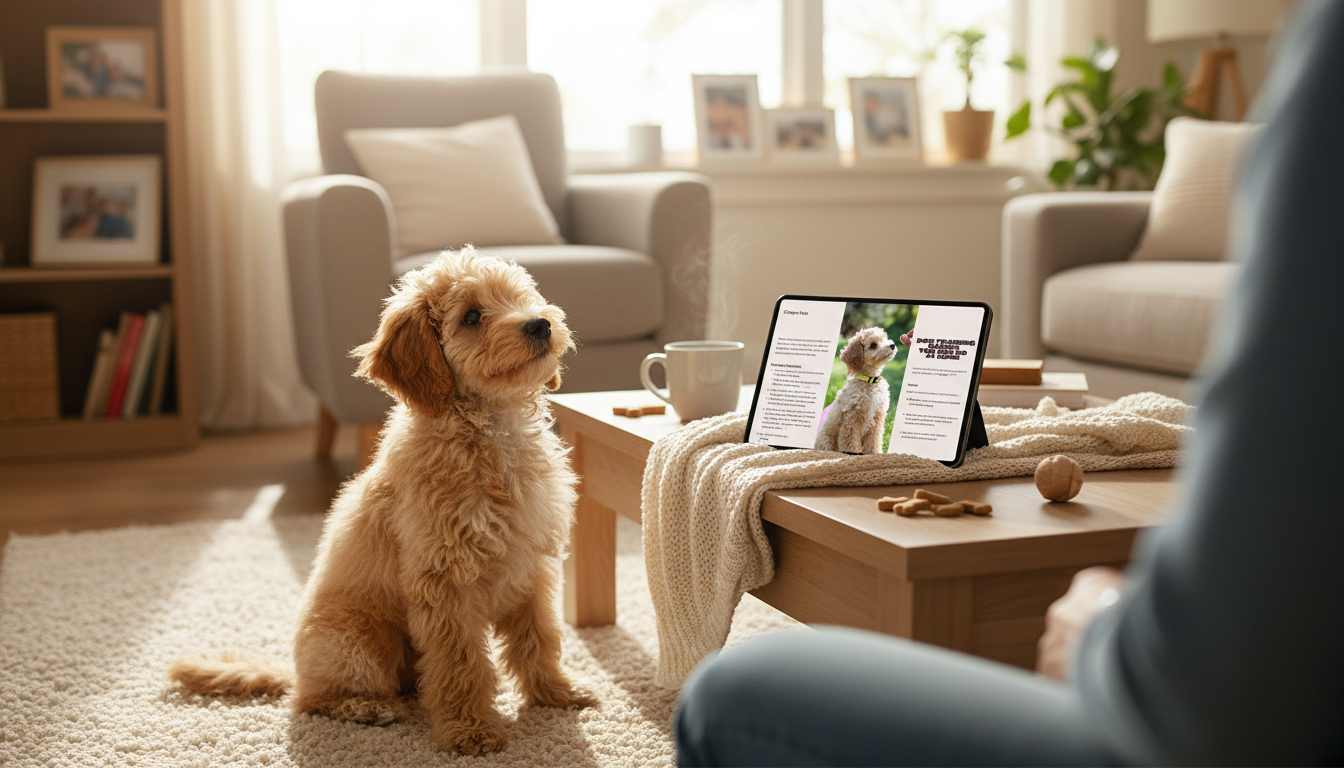
Dog Training Basics at Home: Easy Step-by-Step Skills for Beginners
A calm, well-mannered dog is built through simple routines practiced consistently at home. This guide breaks beginner-friendly training into small steps—what to prepare, how to teach core cues, how to prevent common mistakes, and how to keep progress steady with short sessions.
What “basic training” looks like at home
At-home “basic training” is less about perfect obedience and more about everyday behaviors that make life smoother: responding to their name, sit, down, stay, come, loose-leash walking basics, and polite greetings. These skills reduce chaos, help with safety, and build trust through clear communication.
Keep sessions short—about 3 to 7 minutes—repeated a few times per day. Short practice prevents burnout, keeps motivation high, and gives you more chances to reward the right choices.
Progress is best measured by reliability, not speed. A cue that works in the living room may fall apart in the kitchen, near the front door, or when someone walks by. That’s normal; “proofing” is the process of practicing in different rooms and with gradually increasing distractions.
While training is in progress, management matters. Baby gates, a leash indoors, closed doors, and removing temptations (food on counters, shoes on the floor) prevent your dog from rehearsing unwanted habits—because habits that get practiced get stronger.
Set up for success: supplies, rewards, and a simple routine
Start with rewards your dog truly cares about. Many dogs work well for tiny, soft treats; kibble can be enough for easy repetitions; and toys can be perfect for high-energy dogs. Pair praise with something tangible at first, so your “Good dog!” gains real meaning over time.
Use a clear marker to tell your dog the exact moment they did the correct thing. A clicker works great, but a consistent word like “Yes” can be just as effective when used precisely (say it the instant the behavior happens, then deliver the reward).
Choose an easy environment first: a quiet living room or hallway with minimal distractions and good footing. As your dog succeeds, gradually “level up” by moving to the yard, porch, or sidewalk.
Training goes best when your dog is comfortable: after a potty break, before meals, and during calmer parts of the day. Avoid teaching new skills when your dog is overtired, overstimulated, or hungry to the point of frustration.
Keep your criteria small. If you’re working on stay, only raise one difficulty at a time: distance, duration, or distraction—never all three at once.
If you’d like a structured sequence you can follow day by day, the Dog Training Basics You Can Do at Home | Easy Step-by-Step Ebook for Beginners organizes the progression from simple indoor wins to real-life reliability.
Step-by-step: teaching the first 5 foundations
1) Name game (attention)
2) Sit
3) Down
4) Stay (start tiny)
5) Release word (“Okay” / “Free”)
Polite at-home manners that reduce chaos fast
No jumping greetings
Doorway waits
Counter surfing prevention
Mouthiness
A beginner-friendly 7-day home training plan
| Day | Session A (3–7 min) | Session B (3–7 min) | Everyday practice |
|---|---|---|---|
| 1 | Name game + sit (lure) | Sit repetitions + release word | Reward calm at door and four paws on floor |
| 2 | Down (lure) + sit refresh | Down repetitions + name game | Hand-feed part of a meal for attention |
| 3 | Stay (1–3 seconds) from sit | Stay from down (1–3 seconds) | Wait politely before food bowl |
| 4 | Come indoors (short distance) | Come with mild distraction (toy on floor) | Call once, reward heavily when successful |
| 5 | Loose-leash basics in hallway | Loose-leash basics + turns | Reward leash slack before going outside |
| 6 | Mat/settle: step onto mat → reward | Mat duration (5–15 seconds) | Send to mat during meals or TV time |
| 7 | Mini review: sit/down/stay/come | Practice in a new room or yard | Capture calm behavior throughout the day |
Common beginner mistakes (and quick fixes)
When to get extra help
Look for trainers who use reward-based methods and can explain a measurable plan. The American Veterinary Society of Animal Behavior summarizes evidence-based, humane training guidance here: AVSAB Position Statements. For additional beginner-friendly references, see the American Kennel Club training resources and the Humane Society’s training tips.
A structured step-by-step ebook for consistent practice
For a ready-to-follow approach, see Dog Training Basics You Can Do at Home | Easy Step-by-Step Ebook for Beginners. To keep a simple log of cues, distractions, and wins (which makes progress easier to notice), a dedicated notebook can help, such as Am I Perfect No Spiral Notebook – Funny Notebook – Best Design Notebook.
FAQ
How long does it take to teach basic commands at home?
Many dogs can learn the “shape” of sit, down, and name response in a few days, but reliability usually takes weeks of practice. Proofing around distractions and in new locations is what turns a cue into a real-life skill, so short daily sessions and consistency matter more than speed.
What if my dog won’t take treats during training?
First reduce stress and distraction by moving to a quieter area, then try higher-value rewards or train before meals. If treats still don’t work, use toys, praise paired with a toy, or short sniff breaks as rewards, and lower the difficulty until your dog can succeed.
Can adult dogs learn these basics, or is it only for puppies?
Adult dogs can absolutely learn these skills. Start with easier setups, reward calm, and use management (gates, leashes, removing temptations) to prevent old habits from being practiced while new behaviors are being reinforced.