Joint-Safe Training: Injury Prevention & Smarter Plans
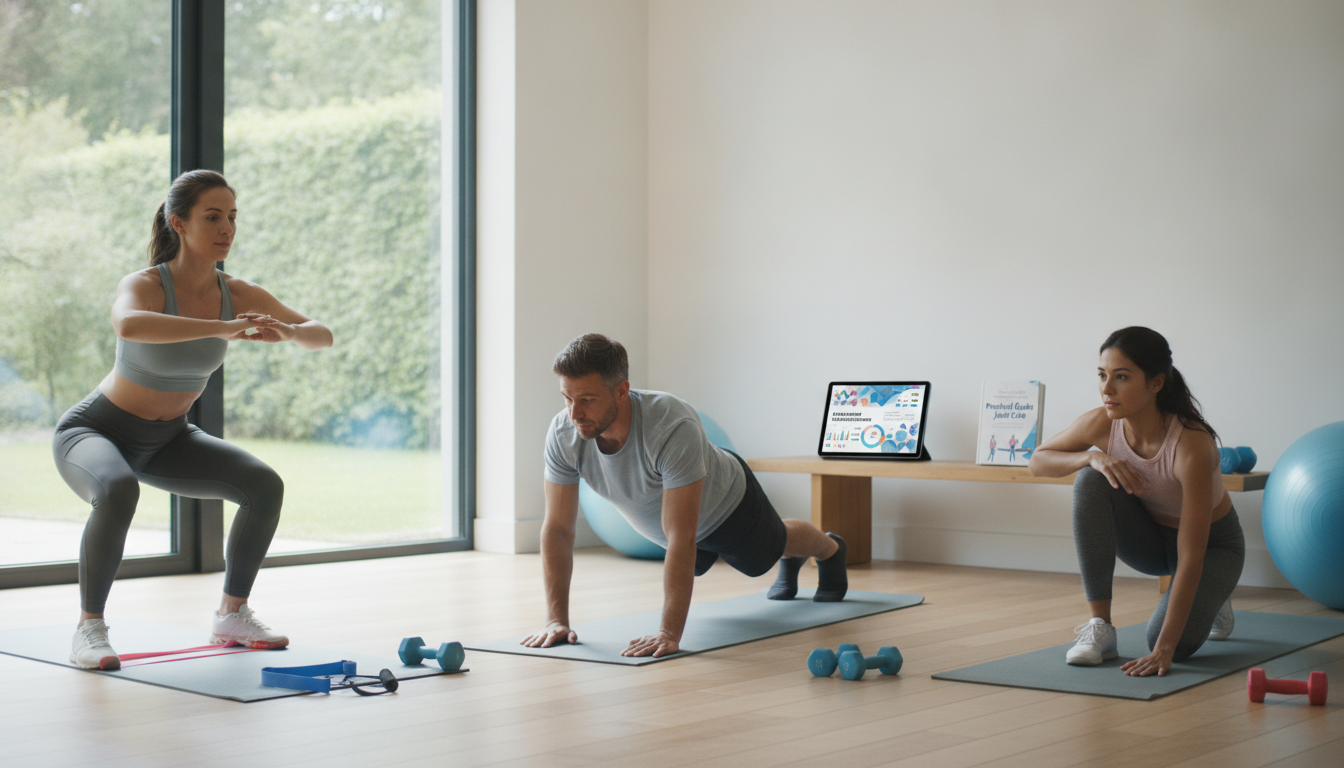
Smart Moves for Healthy Joints: Safe Training, Injury Prevention, and Smarter Planning
Joint-friendly fitness is less about avoiding hard work and more about applying stress in a way your body can actually absorb. When training supports alignment, mobility, strength, and recovery, knees, hips, shoulders, and wrists usually feel better over time—not “beat up” all week. The goal is simple: build resilient movement patterns, choose variations you can repeat consistently, and progress at a pace your joints can tolerate.
How Joints Handle Training Stress
Joints thrive when three basics stay in balance: stable alignment, adequate range of motion, and load tolerance that’s built gradually. Alignment keeps forces where they belong (think knee tracking over the midfoot, ribs stacked over the pelvis, shoulder blades moving smoothly). Range of motion gives you options so a single tissue isn’t forced to do all the work. Load tolerance grows slowly—especially after time off, a new sport, or a sudden jump in intensity.
Many “mystery aches” come from predictable overload patterns: big spikes in weekly volume, pushing deep ranges while fatigued, and repeating high-impact work without enough recovery days. It’s rarely one rep that causes a flare-up; it’s the accumulation of stress that outpaces recovery.
Also, distinguish muscle soreness from joint irritation. Soreness tends to feel diffuse and improves as you warm up. Joint irritation is more localized, sharp, or “pinchy,” and it often changes how you move. That’s a stop signal—not a badge of effort.
Red Flags to Stop, Modify, or Seek Help
Use your symptoms as real-time feedback. Stop the set if pain is sharp, escalating, or alters your mechanics (limping, twisting, shrugging, shifting). Modify if discomfort is mild and improves with a smaller range of motion, slower tempo, lighter load, or a different grip/stance.
Seek medical guidance if you notice swelling, instability (giving way), locking/catching, numbness/tingling, or pain that persists beyond 48–72 hours. If you’re unsure about readiness for activity, ACSM’s preparticipation screening guidance is a solid reference point: ACSM — Exercise Preparticipation Health Screening.
A simple 0–10 discomfort scale can keep decision-making clean: aim for 0–3 during training; avoid pushing through 4+ at the joint. If it’s a 4 today, it’s likely a 6 tomorrow.
Warm-Up That Protects Knees, Hips, Shoulders, and Wrists
1) Raise temperature (3–5 minutes)
2) Mobilize the right areas
3) Activate stabilizers
4) Ramp-up sets before heavy work
Safer Exercise Swaps When Joints Feel Cranky
| If this bothers your joints… | Try this instead | Why it’s often easier on joints | Form cue to keep it safe |
|---|---|---|---|
| Barbell back squat (deep or heavy) | Box squat or goblet squat | More control over depth; easier torso position | Pause lightly on the box; keep knees tracking over midfoot |
| Running on hard surfaces | Incline walk, cycling, or elliptical | Lower impact while keeping cardio stimulus | Build time gradually; keep cadence smooth |
| Barbell bench press (shoulder pinch) | Neutral-grip dumbbell press or push-up on handles | More natural shoulder path and wrist angle | Keep elbows ~30–45° from the torso |
| Overhead press (shoulder discomfort) | Landmine press | Angled press reduces overhead compression | Reach forward and up; ribs down |
| Straight-bar curls (wrist/elbow strain) | Hammer curls or cable curls with rope | Neutral grip can reduce tendon stress | Keep wrists stacked; avoid swinging |
| Standard plank (wrist pain) | Forearm plank or elevated plank | Less wrist extension under load | Squeeze glutes; keep neck long |
Injury Prevention Habits That Actually Work
Protect technique under fatigue by stopping sets 1–3 reps before form breaks when a joint is talking. Recovery basics matter: consistent sleep, adequate protein, and easier days between intense sessions. The CDC’s activity overview is a helpful baseline for balancing weekly movement: CDC — Physical Activity Basics.
AI-Powered Fitness Planning for Joint-Safe Progress
Deloads (planned easier weeks) are not optional for many lifters; they’re how you keep consistency. Build a “swap library” ahead of time for pressing, squatting, hinging, pulling, and conditioning, so you never feel forced to push through a cranky joint just to “finish the plan.” If a joint is repeatedly irritated, reduce exposure (range, load, or frequency), then rebuild with slower progressions. For general joint health context, NIAMS is a reliable resource: NIAMS — Joint Health and Joint Problems.
Putting It Together: A Simple Joint-Friendly Week Template
Helpful Guides & Tools (In Stock)
For a deeper, step-by-step system you can reference when symptoms pop up, consider Smart Moves for Healthy Joints – Practical Guide to Joint Care and Workout Safety, Safe Exercises, Injury Prevention & AI-Powered Fitness Planning.
If training solo is part of your routine (home workouts, independent sports, or self-coached sessions), Flying Solo: The Ultimate Guide to Mastering Solo Sports pairs well with a joint-friendly approach that emphasizes pacing and consistency.
To keep progression guardrails simple, a dedicated log helps you spot volume spikes and recurring triggers—try Am I Perfect No Spiral Notebook – Funny Notebook – Best Design Notebook as a straightforward training and recovery journal.
FAQ
Is it safe to work out with joint pain?
It depends on the type of pain. If it’s sharp, worsening, or changes your mechanics, stop and reassess; if it’s mild (0–3/10) and improves with a smaller range, lighter load, or a grip/stance change, modifying can be appropriate.
What are the safest exercises for knees and hips?
Controlled box squats or goblet squats, short-range split squats as tolerated, hip hinges (like RDL patterns), step-ups, and low-impact cardio are commonly well-tolerated. Prioritize alignment and gradual progression in a pain-free range.
How can training be planned to prevent overuse injuries?
Avoid sudden spikes in volume, rotate stressors across the week, and schedule deloads so tissues can recover. Increase only one variable at a time and use pre-planned exercise swaps when a joint starts getting irritated.