Best Pets for Apartments: Choose, Set Up, and Thrive
Apartment life can be an excellent fit for pet ownership when the animal’s needs match the space, schedule, noise limits, and building rules. This guide breaks down practical pet options for small homes, what daily care really looks like, and how to set up a compact apartment so both pets and neighbors stay comfortable.
Start With the Reality Check: Space, Time, and Building Rules
Before falling in love with a certain species (or a specific rescue listing), start with the constraints that make apartment pet ownership work—or fall apart.
- Confirm lease terms: allowed species, weight limits, breed restrictions, pet deposits/fees, and any limits on the number of pets.
- Estimate daily time: feeding, enrichment, grooming, and cleaning are non-negotiable; in small spaces, missed care becomes noticeable fast.
- Noise and odor tolerance: thin walls and shared hallways mean your routine matters—quiet hours, cleaning cadence, and trigger control at windows/doors.
- Budget beyond adoption: plan for food, litter/bedding, preventive vet care, an emergency fund, grooming, training, and optional pet insurance.
- Travel plans: line up a sitter, boarding option, or trusted neighbor support before the pet arrives.
For general pet care guidance and health basics, reliable references include the ASPCA Pet Care, AVMA pet owner resources, and the CDC Healthy Pets, Healthy People hub—especially helpful for sanitation routines and household safety.
Apartment-Friendly Pet Options (and Who They Fit Best)
The “best” apartment pet is the one whose daily needs fit your schedule and your building’s reality. Here are common small-home picks and the tradeoffs that come with each.
- Cats: often thrive indoors with vertical territory (cat trees, shelves), daily play, scratching options, and consistent litter upkeep.
- Small dogs: can do great with structured walks, training, and enrichment; barking prevention and a solid potty plan matter most in multi-unit buildings.
- Rabbits: quiet and social when properly housed and given exercise time; require chew-proofing, hay-based diets, and access to a rabbit-savvy vet.
- Guinea pigs: social (typically best in pairs), relatively quiet, and well-suited to routine caretakers; need daily fresh food and frequent habitat cleaning.
- Hamsters: compact footprint and often solitary; nocturnal activity can be surprisingly noisy, so choose a quiet wheel and appropriate enclosure.
- Birds: intelligent and engaging but can be loud and messy; a good match only when noise limits and daily interaction needs are realistic.
- Fish or shrimp: low-noise and allergy-friendly; require cycling, water testing, and ongoing maintenance—“low effort” mostly after setup stabilizes.
Quick comparison for small-apartment pets
| Pet type | Space needs | Noise risk | Daily time | Best for |
|---|---|---|---|---|
| Indoor cat | Low floor space; needs vertical zones | Low–moderate | Moderate (play + litter) | Busy adults who can commit to daily enrichment |
| Small dog | Low floor space but needs outdoor breaks | Moderate | High (walks + training) | Active owners with consistent routines |
| Rabbit | Moderate (pen + exercise time) | Low | Moderate | Calm households willing to bunny-proof |
| Guinea pigs | Moderate (large cage) | Low | Moderate | Routine caretakers; families who can clean often |
| Hamster | Low (large enclosure recommended) | Low–moderate (night activity) | Low–moderate | Night owls; people with limited space |
| Bird | Low–moderate (cage + flight time) | High | High | Owners comfortable with sound and daily engagement |
| Aquarium | Low (footprint) but heavy | None | Low–moderate | People who prefer observation-style pets |
Matching a Pet to a Small Home: Temperament and Care Signals
Square footage matters, but temperament and care requirements matter more. Focus on the signals that predict day-to-day success.
- Energy level: pick a pet whose exercise and stimulation needs can be met indoors (or through reliable outdoor routines).
- Sociability: birds and many rabbits need consistent interaction; many cats can tolerate more independence if enrichment is steady.
- Sensitivity to commotion: consider traffic noise, roommates, kids, and frequent visitors.
- Shedding and allergies: limited ventilation can intensify allergens; plan grooming, washable textiles, and (if needed) air filtration.
- Litter/odor management: choose a system you’ll maintain daily—small lapses become big problems fast.
- Veterinary access: confirm nearby exotic vets before committing to rabbits, guinea pigs, or birds.
Setting Up a Compact Apartment for Pet Success
In a small home, the setup is the difference between “cozy” and “chaotic.” Aim for clear zones and easy-to-clean systems.
Daily Routines That Make Apartment Pets Easier
Common Apartment Challenges and Simple Fixes
A Practical Next Step: A Pet Choice and Setup Checklist
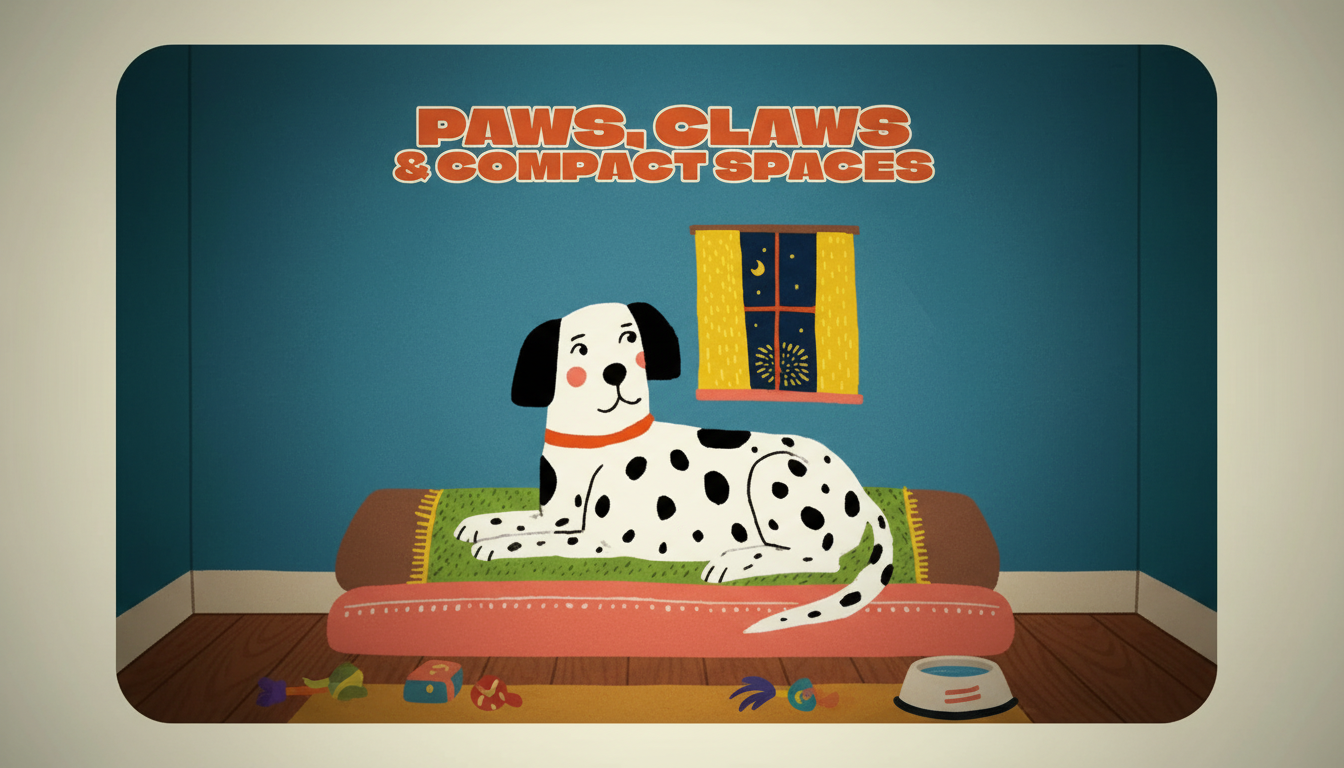
If a structured, space-specific roadmap would help, check out Paws, Claws & Compact Spaces: The Guide to Pets for Small Apartments (digital eBook). For keeping track of feeding notes, cleaning cadence, training cues, or vet questions in one place, a simple paper system can be surprisingly effective—Am I Perfect No Spiral Notebook works well as a low-friction pet log.
FAQ
What is the easiest pet to keep in an apartment?
“Easiest” usually means the pet whose daily maintenance you can do consistently: feeding, cleaning, and enrichment. Many people find a well-set-up aquarium quiet and manageable once stable, while cats can be straightforward if litter and play are handled daily; small “caged” pets can still require frequent cleaning and specialized vet care.
Are cats or small dogs better for small apartments?
Cats often adapt well to small homes when they have vertical space, daily play, and reliable litter upkeep. Small dogs can thrive too, but they require consistent outdoor breaks and training to prevent barking or hallway reactivity from becoming a neighbor issue.
How can pet odors be controlled in a small apartment?
Use a simple routine: scoop/spot clean daily, seal waste promptly, and clean accidents with enzyme cleaners. Add ventilation (or an air purifier), wash bedding regularly, and choose litter/substrate that matches your pet and your cleaning schedule.












Leave a comment
You must be logged in to post a comment.