Smarter AI Workout Plans: Personalize, Progress, Sustain
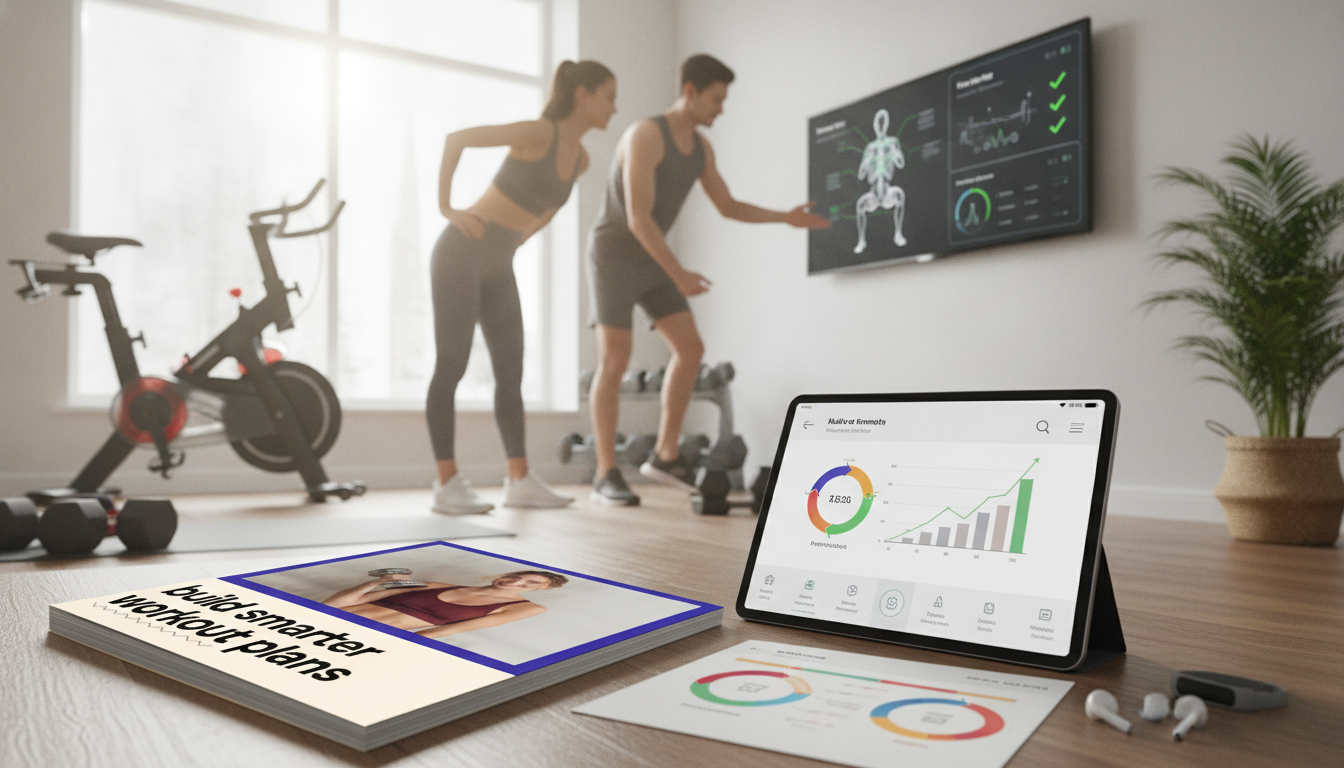
How to Build Smarter Workout Plans with AI for Personalized Training and Sustainable Results
AI can make workout planning faster and more personal—if the inputs, constraints, and checkpoints are set up correctly. A smarter plan isn’t just a list of exercises; it matches training age, schedule, recovery capacity, equipment, and goals, then updates based on performance and consistency. The structure below focuses on building an AI-assisted plan that is safe, measurable, and easy to sustain week after week.
Start with a clear training profile (the inputs that matter)
AI can only personalize what it can “see.” The fastest way to improve plan quality is to define your goal in one line, add real-world constraints, and supply a baseline that’s honest (not aspirational).
- Define the primary goal in one line (strength, hypertrophy, endurance, fat loss, mobility, sport prep) and a realistic timeline.
- Set constraints: days per week, session length, equipment, injuries/pain triggers, preferred exercises, and non-negotiable life commitments.
- Capture baseline ability: recent bests (or estimated), current weekly activity, and training age (beginner/intermediate/advanced).
- Pick 2–4 measurable markers: reps at a target load, weekly running volume, waist/weight trends, resting heart rate, or session RPE consistency.
- Provide AI with “hard rules” (e.g., no overhead pressing, limit jumping, keep sessions under 45 minutes).
AI intake checklist for better plan quality
| Category | What to provide | Example |
|---|---|---|
| Schedule | Days/week, minutes/session, preferred days | 3 days/week, 45 minutes, Mon/Wed/Fri |
| Equipment | Home/gym list and limitations | Dumbbells to 50 lb, bench, pull-up bar |
| Goal | Single priority + secondary outcomes | Primary: build strength; Secondary: improve posture |
| Experience | Training age and recent training style | 1 year consistent; full-body 3x/week |
| Risks | Injuries, pain patterns, medical limits | Knee pain with deep flexion; no impact jumps |
| Recovery | Sleep, stress, other sport/steps | 6.5h sleep; 8k steps/day; weekend hikes |
If you want a ready-to-use framework for collecting these inputs and turning them into a repeatable plan, the ebook How to Build Smarter Workout Plans with AI organizes the process into simple checklists and weekly reviews you can reuse for every training block.
Turn your goal into a weekly structure AI can’t “guess”
When the weekly structure is vague, AI often “fills the gaps” with random variety or mismatched intensity. Instead, decide the skeleton first—then let AI generate exercise options inside that structure.
- Choose a split that matches frequency and recovery: full-body (2–4 days), upper/lower (4 days), push/pull/legs (5–6 days), or mixed hybrid.
- Decide the priority lifts or movement patterns (squat/hinge/push/pull/carry/core) and the minimum effective volume.
- Set intensity guidelines using RPE/RIR so the plan adapts without max testing every week.
- Define progression style: linear (add reps/weight weekly), double progression (reps then load), or wave loading (heavy/medium/light).
- Specify conditioning type and dose (Zone 2, intervals, steps) to avoid interference with strength goals.
For general health baselines, it helps to anchor your conditioning plan to established guidance like the World Health Organization’s physical activity recommendations and then scale up or down based on recovery and goals.
Use AI to generate options, then apply a human safety filter
AI is excellent at producing menus of exercises and session layouts. The safety step is making sure the output matches your joints, your equipment, and your current skill level.
- Check exercise selection for joint tolerance, equipment reality, and movement balance (push vs pull, hinge vs squat).
- Verify weekly volume and fatigue: avoid stacking high-stress lower-body days back-to-back when recovery is limited.
- Keep technique-sensitive lifts appropriate to experience level; swap to simpler variations when needed.
- Ensure warm-up, ramp sets, and rest times are included—especially for strength-focused work.
- Add clear stop rules: pain above a threshold, form breakdown, or repeated missed reps triggers an immediate modification.
Progression models are well established in the strength world; the ACSM Position Stand on resistance training progression is a useful reference when you’re deciding how fast to add load, reps, or total work over time.
Build progression that survives real life
The best plan on paper fails when life gets busy. A sustainable AI-assisted plan includes built-in flexibility so a rough week doesn’t turn into a lost month.
Consistency improves when logging is frictionless. If you prefer writing sessions down rather than managing another app, a simple paper tracker like Am I Perfect No Spiral Notebook can work well for recording top sets, session RPE, and quick recovery notes you can reuse for next week’s adjustments.
Prompts and templates that improve plan output
If your training includes independent sports days (cycling, climbing, running, rec league practice), planning gets easier when you treat those sessions like “real” training stress. Flying Solo: The Ultimate Guide to Mastering Solo Sports is a helpful companion for balancing solo sport practice with gym work without burning out.
Common mistakes when using AI for training plans
Practical next step: build your first AI-assisted 4-week block
FAQ
Is it safe to use AI to create a workout plan?
It can be safe when you provide injuries/limitations, set RPE/RIR limits, and choose exercises appropriate to your experience level. If pain spikes, form breaks down, or you repeatedly miss reps, modify immediately and seek qualified help for medical or rehab situations.
How often should an AI-generated plan be updated?
Use small weekly adjustments based on your training log, and make bigger structural changes every 4–8 weeks. Update sooner if recovery worsens, progress stalls for 2–3 weeks, or your schedule/equipment changes.
What information should be logged so AI can personalize training effectively?
Keep it minimal: top sets (load/reps), average session RPE, whether key accessories were completed, conditioning dose, sleep/stress notes, and any pain flags. Consistent tracking beats perfect tracking.












Leave a comment
You must be logged in to post a comment.